 Lowest price guarantee
 Free worldwide shipping


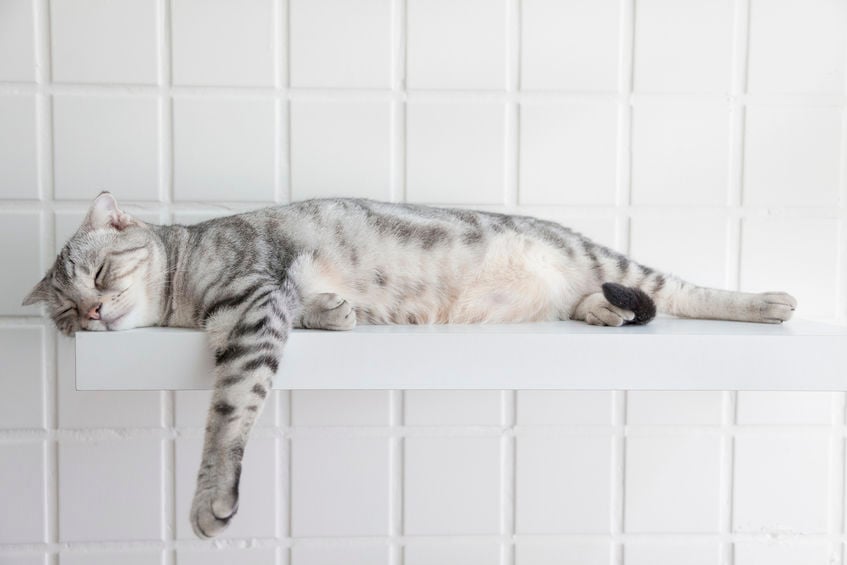
Cats are known for landing on their feet, but this level of feline finesse requires some complicated physics. Thanks to their keen flexibility and a specially designed inner ear, cats are masters of landing on their feet even from the most precarious of falls.
Cats have more vertebrae in their bodies than humans, allowing them to twist and turn with agility when they need to react quickly. This is especially important when your companion jumps or falls, as a cat uses his fast reflexes and flexibility to land on his feet. To do this, your pet uses his sense of sight and inner-ear balancing system to quickly determine which way is up, and then then rotates his front paws so they face downward. His lower body follows suit, allowing Kitty to quickly and seamlessly land on his feet.
In addition to their flexible spines, cats have other physical traits that help them land with grace, including their small bodies, light bones, and thick fur that serves to slow falls and soften impacts. Their collarbones afford them additional flexibility, too, as these bones are free-floating in felines, unlike other mammals. If you’ve ever noticed your pet fall back-first, you probably saw him twist his front end so his paws face the ground, with his hind legs following suit. His tail helps him realign during the fall, keeping Kitty level until he makes contact with the ground.
Comments
No comments yet. Be the first to share your thoughts.
Leave a comment